The story
A love song, not a war song
When you hear it sung by a male choir it is easy to forget, but Quel mazzolin di fiori is a girl’s lament. She has picked a posy of flowers in the mountains for her sweetheart, but on Saturday evening he fails to appear – he has gone to see Rosina instead – and she blames her own poverty. Her private heartache is mixed with dread of what the village will say. It is a theme as old as folk song itself, told in a handful of words and without any rhetoric.
Its structure is typical of oral tradition: each verse picks up the last line of the one before, so that the story unfolds link by link, like a chain. This helps singers remember the words, and it is one reason the song has come down to us so intact. The text blends Italian with northern dialect forms such as "vegnù" and "l’è andà" – a sign of a song born and raised in the Alpine valleys long before it became common property.
Nobody knows who wrote it. The earliest written record dates from 1870, in an article by the Tyrolean scholar Ludwig Hörmann in the Zeitschrift des Ferdinandeums für Tirol und Vorarlberg, published in Innsbruck. That is the first documented date, not necessarily the song’s birth: folk songs usually travel by word of mouth for years, sometimes for generations, before anyone writes them down. It spread right across the Alps – as late as 1967 the ethnomusicologist Bernard Lortat-Jacob recorded it in the Roya valley, on the border between Liguria and France, describing it as an extremely common song in the Italian Alps.
From the valleys to the trenches
The turning point came with the First World War. There is nothing military about the lyrics, yet the song became one of the Alpini’s great favourites – one history of Italian song even calls it the most sung of all in their ranks. The reasons are not hard to see: a simple tune, perfect for singing together on the march, and words about home, the mountains and loved ones far away. The soldiers came from every region, and when they went home they took the song with them, so that a melody born in the northern valleys became known throughout Italy.
By the 1930s its place in the military repertoire was confirmed on record as well: the Excelsius label recorded it in 1933 and 1937 in collections entitled Canti di soldati (Soldiers’ songs), alongside other pieces bound up with the memory of the Great War.
After the war: choirs, records and radio
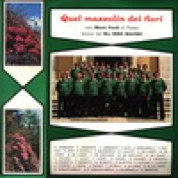
By the end of the Second World War the song had become a symbol. In 1955–56 it lent its name to a Sunday radio programme for the armed forces, produced by Dino Verde. It then crossed into popular music: Gigliola Cinquetti recorded it in 1972 and Luciano Tajoli in 1978 with the Coro Idica of Clusone, while in France it was taken up by Les Compagnons de la chanson. At the same time it became a cornerstone of the mountain-choir repertoire, arranged for male voices in many different versions.
Even today audiences recognise it from the very first notes, and mountain choirs keep passing it on, the way families pass down their heirlooms.